
Replication-Competent Lentivirus (RCL) Detection Kit: Ensuring the Safety of Gene Therapy and Research
Lentiviral vectors are indispensable in gene therapy and advanced molecular biology research, providing efficient delivery of genetic material into target cells. However, one critical concern in using these vectors is the unintentional formation of Replication-Competent Lentivirus (RCL), which poses potential safety risks in clinical and research applications. The RCL Detection Kit is an essential tool to mitigate these risks by ensuring the purity and safety of lentiviral preparations. Below, we explore the importance, functionality, and applications of this kit with references to authoritative .edu and .gov resources.
What is Replication-Competent Lentivirus (RCL)?
RCL arises when recombination occurs during the production of lentiviral vectors, restoring their ability to replicate. Although rare, RCLs can pose serious risks, including unintended infections or complications during gene therapy procedures.
To understand the basics of lentivirus and its clinical applications, refer to the National Institutes of Health (NIH) and PubMed Central (PMC).
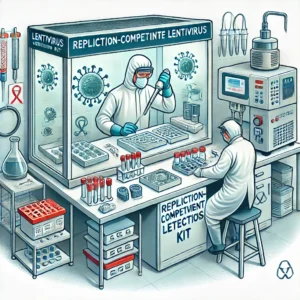
Why Detect RCL?
1. Ensuring Patient Safety
In gene therapy trials, RCLs can lead to adverse effects, such as off-target gene integration or immune reactions. Ensuring RCL-free preparations is vital for patient safety, as emphasized by the Food and Drug Administration (FDA).
2. Laboratory Biosafety
Researchers handling lentiviral vectors may be exposed to biohazards if RCL is present. Proper detection protocols ensure compliance with biosafety guidelines from the Centers for Disease Control and Prevention (CDC).
3. Compliance with Regulatory Standards
Regulatory agencies like the FDA and European Medicines Agency (EMA) require rigorous RCL testing in clinical-grade vector production.
Features of the RCL Detection Kit
The RCL Detection Kit offers the following benefits:
- High Sensitivity: Capable of detecting even low levels of RCL, crucial for clinical-grade assurance.
- Rapid Turnaround: Results within hours, supporting time-sensitive workflows.
- Comprehensive Components: Includes all reagents needed for accurate and reproducible testing.
- Regulatory Compliance: Aligns with international safety standards, as outlined by the World Health Organization (WHO).
Detailed guidelines for quality control in gene therapy are available on ClinicalTrials.gov and the FDA’s Biologics Regulations page.
Applications of the RCL Detection Kit
1. Gene Therapy Development
The RCL Detection Kit plays a pivotal role in ensuring that lentiviral vectors used in gene therapy trials are free from replication-competent viruses. Explore more about gene therapy safety protocols at the National Human Genome Research Institute (NHGRI).
2. Vector Production Quality Control
Pharmaceutical companies and academic laboratories rely on this kit to test vector batches for safety before clinical application. Learn more about best practices at the NIH’s Office of Science Policy.
3. Biosafety in Research
Laboratories using lentiviral vectors in preclinical research use the kit to safeguard researchers and experimental integrity. Refer to the CDC Laboratory Biosafety Manual for additional information.
How the RCL Detection Kit Works
The RCL Detection Kit typically employs a PCR-based approach for detecting lentiviral sequences indicative of replication competency. Here’s how it works:
- Sample Preparation: Viral samples are processed to extract RNA or DNA.
- Amplification: Using specific primers, the kit amplifies sequences unique to replication-competent lentiviruses.
- Detection: Results are visualized via real-time PCR systems for qualitative or quantitative analysis.
Protocols for PCR-based assays can be accessed from the National Center for Biotechnology Information (NCBI) and NIH.
Advancements in RCL Detection
1. Enhanced Sensitivity
Innovative enzyme systems and primer designs have improved the sensitivity of RCL detection kits. Updates on these advancements can be found at PubMed.
2. High-Throughput Screening
Modern RCL Detection Kits support high-throughput screening, making them suitable for large-scale manufacturing. Learn more at the FDA’s Gene Therapy Products page.
Regulatory Guidelines for RCL Monitoring
Regulatory agencies worldwide emphasize rigorous RCL testing to ensure the safety of lentiviral vectors. The FDA and EMA provide comprehensive guidelines for developers of gene therapy products. Explore detailed regulatory requirements at:
Conclusion
The Replication-Competent Lentivirus (RCL) Detection Kit is a critical tool for safeguarding the integrity and safety of lentiviral vector applications in gene therapy and research. Its precision and compliance with international safety standards make it indispensable in both clinical and laboratory settings.
For more information, visit:
By ensuring the purity of lentiviral vectors, the RCL Detection Kit supports innovative therapies and groundbreaking research while maintaining the highest standards of safety.