
Dog GTP-Binding Nuclear Protein Ran ELISA [RAN]: An In-Depth Overview
The Dog GTP-binding nuclear protein Ran (RAN) ELISA is a specialized assay for detecting and quantifying the RAN protein in biological samples. This critical protein, involved in nucleocytoplasmic transport, cell cycle regulation, and RNA processing, is essential for various cellular functions and has implications in veterinary health and research. Below, we explore the importance of RAN, its role in canine biology, and the applications of the ELISA assay, supported by references to authoritative educational and governmental resources.
What is RAN Protein?
RAN (Ras-related Nuclear protein) is a member of the GTPase family, which regulates intracellular transport and maintains cellular homeostasis. It is involved in:
- Nucleocytoplasmic Transport: Facilitates the import and export of proteins and RNA across the nuclear membrane, as outlined by the National Center for Biotechnology Information (NCBI).
- Mitotic Spindle Assembly: Plays a critical role during cell division, ensuring proper chromosome segregation, as detailed in studies from the National Institutes of Health (NIH).
- RNA Processing and Export: Essential for mRNA stability and transport, as described by the U.S. Department of Health and Human Services (HHS).
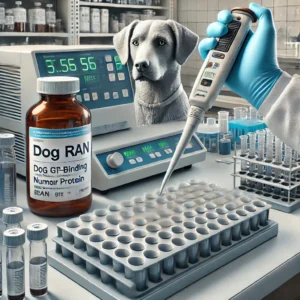
Principle of the RAN ELISA
- Specificity of Detection:
The assay uses monoclonal or polyclonal antibodies specific to the RAN protein to ensure accurate detection. Details on antibody development are available at the Food and Drug Administration (FDA). - Quantitative Analysis:
By leveraging enzyme-substrate reactions, the ELISA provides precise quantitative measurements. For an overview of ELISA methodologies, refer to the Centers for Disease Control and Prevention (CDC). - High Sensitivity:
The assay can detect minute quantities of RAN protein, making it ideal for research and diagnostics. Explore sensitivity metrics in immunoassays at PubMed.
Applications of RAN ELISA in Canine Research
- Veterinary Diagnostics:
- The assay supports the detection of RAN-related anomalies in dogs, aiding in the diagnosis of genetic and cellular disorders. See diagnostic protocols from APHIS.
- Cancer Research:
- RAN overexpression is linked to tumorigenesis, making it a potential biomarker for canine cancers. Learn more from the National Cancer Institute (NCI).
- Reproductive Biology:
- RAN’s role in nuclear transport and cell cycle regulation is vital for understanding canine reproductive health. NIH reproductive health resources offer additional insights.
- Neurological Studies:
- The protein is implicated in neurodegenerative disorders, making the ELISA useful in veterinary neuroscience. The CDC’s neurology research highlights similar studies.
- Comparative Biology:
- By studying RAN in dogs, researchers can draw parallels with human diseases, as explained by the NIH Comparative Genomics Program.
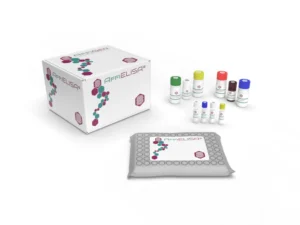
Advantages of the Dog RAN ELISA
- High Specificity and Sensitivity:
The assay accurately detects RAN protein levels, even in complex samples. For more on assay specificity, visit the FDA’s immunoassay standards page. - Ease of Use:
Pre-coated plates and ready-to-use reagents simplify the workflow, ensuring reproducibility. CDC’s laboratory tools provide similar user-friendly approaches. - Wide Range of Applications:
Compatible with serum, plasma, and tissue lysates, the assay supports diverse research needs. Details on sample preparation can be found at NCBI. - Scalability:
The ELISA is suitable for both small-scale experiments and high-throughput studies, as described by PubMed.
Protocol Overview
- Sample Preparation:
- Collect serum or plasma from canine subjects using standard protocols. Refer to CDC’s guidelines on biospecimen handling.
- Assay Procedure:
- Add samples and standards to pre-coated wells containing RAN-specific capture antibodies.
- Incubate, wash, and add enzyme-conjugated detection antibodies.
- Apply the substrate and measure absorbance at the appropriate wavelength.
- Data Interpretation:
- Construct a standard curve for quantification of RAN levels. Insights into data analysis can be found at NIH’s data science resources.
Challenges and Future Directions
- Biological Variability:
Differences in RAN expression across breeds and conditions may affect interpretation. Learn more about addressing variability at USDA. - Integration with Genomics:
Combining ELISA with genomic tools like next-generation sequencing could provide a comprehensive understanding of RAN-related pathways. See Genome.gov for resources. - Development of Multiplex Assays:
Future innovations may include assays targeting multiple GTPases simultaneously. For multiplex assay insights, refer to NCBI.
Educational and Government Resources
Here are additional references for a deeper dive into RAN and its applications:
- National Cancer Institute (NCI)
- FDA Immunology Resources
- USDA Veterinary Research
- CDC Laboratory Methods
- NIH Comparative Genomics
- PubMed Research Papers
- NIH Reproductive Health Resources
- NCBI Protein Databases
- APHIS Animal Health
- Genome.gov – Genomic Research
Conclusion
The Dog GTP-binding nuclear protein Ran ELISA is a valuable tool in veterinary diagnostics and research. Its high sensitivity, specificity, and ease of use make it indispensable for studying cellular processes, cancer biology, and neurological disorders in dogs. Backed by authoritative resources like NIH, CDC, and FDA, this assay provides critical insights into the role of RAN in canine health and disease.
By leveraging this assay, researchers and veterinarians can advance their understanding of canine biology and contribute to broader comparative studies that bridge human and veterinary medicine.